
We care deeply about your metabolic health here at Lifestyle Integration.
Subscribe to our newsletter to get our free eBook on how to manage metabolic dysfunction
The SPEED Trap: How To Reverse Metabolic Dysfunction


Subscribe to our newsletter to get our free eBook on how to manage metabolic dysfunction
The SPEED Trap: How To Reverse Metabolic Dysfunction

We all know that the suns UV rays can be damaging causing sunburn and skin cancers. Slip, Slap, Slop is a common catchphrase around the application of sunscreen and any visit to the beach or time spent in the outdoors. The reality is that many of us have decided that the sun is bad and to be avoided.
This is a mistake.
Yes, spending too much time in the sun is detrimental to the skin and overall health. But mounting research is showing that the benefits of time in the sun are vastly outweighing the negatives.
One of these benefits is natural sunscreen protection.
Barolet writes in the 2016 article Infrared and skin: Friend or foe that when you pre-condition the skin with a dose of near infrared light that you get “a SPF-15 like sun protection factor effect.”

Some background information is needed here to fill in the gaps on how to reduce sunburn and get this natural sunscreen protection.
The field of photobiomodulation (PBM) is where red and near infrared light are applied to the body to increase energy production, decrease inflammation and speed up healing in brief. Infrared light is NOT ultraviolet light. Near infrared light is invisible but is not ionising. UV light is ionising, and this is what causes skin damage.
Barolet explains in his research paper that when you apply near infrared light to the skin BEFORE you are exposed to UV light that you get the sunscreen SBF-15 protective effect which they call photoprevention.
In other words, near infrared light (photobiomodulation) protects against UV damage and sunburn.
This is not surprising. Of course, nature has protection against sunburn naturally built in to the system. We just aren’t using nature correctly and to our benefit. We don’t pre-condition our skin we just run out in the middle of the day, burn, and then say the sun is bad!
Another piece of the puzzle to understand is that the ratio of UV light to near infrared light is lower when the sun is rising and setting as this figure from Barolet paper shows. The most harmful time to be in the sun is mid-day. Conversely the most beneficial time is when our shadows are long. The mornings and the evenings.

If we were more in tune with natures rhythms, we would be up at the crack of dawn and WITNESS the sunrise. We would be outside soaking up the beneficial photobiomodulation light and pre-conditioning our skin so that we would have natural sunscreen protection against sunburn.
The sunrise is our natural sunscreen.
If you look at the image above you will also see that the sunset is where PBM repair occurs. Should you damage yourself with too much UV light during the day the sunset is natures way of repairing this with photobiomodulation.
The sunset is our natural repair system to UV light damage.
I realise that not everyone will be able to witness the sunrise. The good news is that there are other ways to get your photobiomodulation dose and your natural sunscreen alternative.
You can use a near infrared sauna. This will very closely mimic the sun in that you are getting the red light therapy and near infrared photobiomodulation with full spectrum light and some of the warmth of the sun.

Alternatively, you can use a LED panel which will provide single wavelengths in the red and near infrared spectrum. Just be careful not to have the irradiance level too high. You want to mimic the sun which is about 20 to 30mW/cm2
Ironically, the sun that you are so scared of is actually what you need to protect yourself.
To learn more about near infrared saunas and photobiomodulation you can visit www.nirsauna.com.au
Don’t hesitate to contact us with any questions either.
Yours in Health,
Dr Todd Lizon (Chiropractor)
B.P.H.E., D.C.

George Bernard Shaw once wrote that “Youth is the most precious thing in life; it is too bad it has to be wasted on young folks.”
As we age and pass various “benchmarks” we can reflect on our youth and the energy and health that usually comes with it. Most of us with a true sense of fondness, in the sense that we would like it back!
The anti-aging field has really taken off in the last number of years and there is now a lot that can be done to improve our health and well-being. Today I want to share a documented way to raise your stem cell function back to the level of your younger days.
First, we need to understand why this is important.
Mesenchymal stem cells (MSC) have the ability to differentiate into a variety of cell lineages, including osteogenic, chrondrogenic, adipogenic, myogenic, and neurogenic lines. This means that your stem cells can change into whatever cell is needed based on injury or disease. Bone, muscle, cartilage, muscle and nerve. Therefore, MSCs hold great promise in a vast number of medical fields. Things like anti-aging, and the treatment of both chronic and acute diseases.
The problem is that as we age and need our stem cells, the functional capacity of them declines. If we need them but they aren’t there in abundant numbers, the repair system is compromised and we get sick. We can’t properly fix whatever issues need to be fixed.
The critical piece of information you need to be aware of is that the decreased function of aged MSCs has been linked to mitochondrial dysfunction.
What those of you who follow us know, is that Photobiomodulation (PBM), also known as low-level laser therapy (LLLT), is a fantastic way to directly improve mitochondrial function.
A study was published in June 2021 titled “Photobiomodulation has rejuvenating effects on aged bone marrow mesenchymal stem cells.” They wanted to test the hypothesis that overall effectiveness of aged stem cells can be restored to the level of young stem cells by photobiomodulation.
They took MSCs isolated from bone marrow of both young (3-month-old, 3 m) and old (24-month-old, 24 m) mice and subjected them to different PBM regimens
What they found is that the beneficial effect of a single PBM treatment did not last very long in aged MSCs as compared to younger ones. This is NOT good.
What they then did is applied 3 consecutive PBM treatments at 24 hour intervals. This more intensive and cumulative treatment was able to demonstrate that the beneficial effect of PBM therapy can be achieved by applying three consecutive PBM treatments at 24-h intervals. In other words, they were able to get stem cell function back to the level of young stem cells with regular photobiomodulation treatments.
How can you do this yourself?
The simple answer is pick a PBM device and actually use it consistently if you are over 50.
We recommend using a portable near infrared sauna. These provide near infrared and red light therapy with the wavelengths you need to get the photobiomodulation effects of the mitochondria. You can choose any sort of photobiomodulation device but when you use the near infrared sauna you get the PBM benefits as well as the heat and detoxification benefits of a infrared sauna.
You can view our other videos to better understand all the benefits to a portable near infrared sauna.
The key point today is that CONSISTENCY is required to have a beneficial and LASTING effect on stem cells when you are over 50.

Stress. As simplistic as this may sound the cause of your problems primarily comes down to one of, or a combination of, these three stressors; physical, emotional or chemical.
Let’s back up a little. In Bruce Lipton’s sensational book The Biology of Belief he illustrated how it is the environment (stress) and not our genetics that are the cause of our problems unless you are one of the 5% who can legitimately claim genetic issues.
He did a fantastic experiment where he removed what we would consider to be the brain of the cell, the nucleus. He found that the cell did NOT die as we would have expected if it was well and truly the brain of the cell. It continued along with its business.
Months later however the cell did die. When they removed the so called “brain” of the cell (the nucleus) what they actually removed was the DNA. The role of DNA is reproduction and repair of the cell! Therefore the cell died because of an inability to repair the ongoing damage of day to day stressful living.
What this means is that it is not our DNA that is running the show. Genetics are not the only key to good health.
What is key is our ability to manage our stresses.
So going back to the beginning, unless you are one of the legitimate 5% who can claim genetic defects then it is our inability to cope with stress that causes damage and disease over the long term.
It is our stressful environment that tears us down. Let’s assume your DNA is not broken. If you can minimise the three stressors, you should be able to optimise your health. This is referred to in loose terms as epigenetics.
This chart summarizes the various forms of stress in the broadest of strokes and is well worth memorizing. Notice how the arrows point to each other? What this means is that in addition to being the cause of degenerative issues when you work on one you improve the others!

This is great news for a chronically depressed person for example. If they are having trouble with the emotional they can improve by going for a walk (physical) or by taking the right supplements (chemical). If someone is very fatigued and tired all the time (physical) they can improve by speeding up the metabolism with specific supplements which is chemical in nature.
Your health is able to be reclaimed. Just because we are over 50 doesn’t mean we can’t thrive.
This article focuses on stress, the three stressors and understanding how it’s our environment that is key to reclaiming our health. However, there are even things you can do to help with the dna as well. Things like stem cell therapy.
At Lifestyle Integration we are continuously looking at you and your stresses, and helping you thorough personalized lifestyle and supplement programs to help you live a long healthy, vibrant life. Get your stresses optimized and good things happen!

Over 50 with health issues that prevent you from exercising the way you would like to? This is surprisingly more common than you might think. Unfortunately, it can lead to inactivity, blood pressure issues, obesity, lung issues, diabetes, cardiovascular disease and more.
New research shows that the use of a sauna may provide a substitute or alternative to exercise when you can’t get the exercise yourself for whatever reason.
First you need to wrap your head around this concept. Without doubt, sauna bathing and aerobic exercise have both, individually, been shown to positively affect cardiovascular function. Things like blood pressure and arterial stiffness.
The second key thing to take on board is that direct comparisons of the results between a single sauna session and the combination of exercise and sauna, or exercise alone are sparse.
This study is attempting to change this and matched the time of a sauna (30 minutes) with the time of a sauna followed by exercise (30 minutes total).
It looked like this.
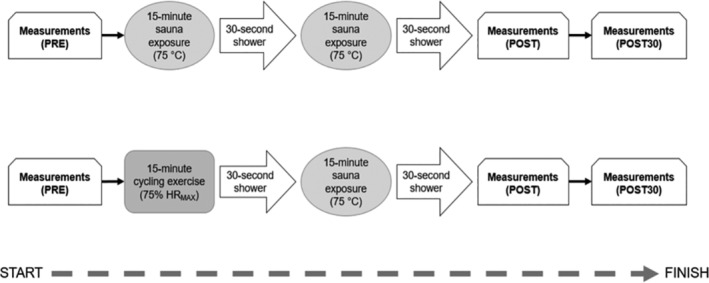
They used a Finnish sauna, which is a hot air sauna, but a near infrared sauna would provide similar results. Realistically, it would most likely provide even better benefits as you will get both the heat benefits as well as the light or photobiomodulation benefits. Here is a link for more on the benefits of a near infrared sauna.
The results show that both the 30 minute sauna alone, and the 15 minutes of exercise followed by the shorter 15 minute sauna were able to reduce both systolic and diastolic blood pressure along with mean arterial pressure.
There are some limitations to this study, but this is encouraging work.
It’s encouraging because not everyone can exercise and we need alternatives. A portable near infrared sauna, or any type of sauna, can provide many of the benefits of exercise without the exercise. This is an important area of research and one that needs to be further explored.
If you are in a situation where you can’t exercise it is strongly suggested you look into a near infrared sauna. Not just for the exercise benefits but also for the energy, inflammation, wound healing, sleep, detoxification, relaxation, heart, brain and other benefits. A portable near infrared sauna in your home may be the tool you are looking for to help get your health back on track.

Purchasing a sauna for your home may be one of the most important health decisions you make. We have been in the industry for over 10 years and know it can be difficult to sort through all the features of the different types of saunas. This is why we have put together this series. To help you learn what a near infrared sauna is and how it compares to traditional and far infrared saunas.
First, let’s define what we mean by full spectrum infrared light.
Infrared light is divided into 3 types based on their wavelengths.
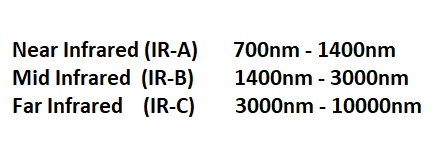
When you use a near infrared sauna you are getting visible red light, near infrared light, as well as mid and far infrared. Hence, we can call it a full spectrum sauna.
So why does this matter?
Near infrared (and red light) is fundamentally different from mid and far infrared in that the light is absorbed by the mitochondria in your cells, not water. This is called photobiomodulation. The key point here is that there is essentially no heat felt. Red and near infrared are heat-less as they are not absorbed by water.
You can’t. This is why, if you are going to have a sauna with all these wavelengths, you need some of the mid and far infrared for heat. The red and near infrared light, and their photobiomodulation benefits, are best thought of as a bonus. A two for one deal. Heat benefits as well as substantial photobiomodulation benefits. Google photobiomodulation if you aren’t sure.
There is a little bit more to consider with full spectrum light though…….
If we go back to our chart, you will see that near infrared light ranges in wavelengths from 700nm to 1400nm. If you only were to get one of those wavelengths, would you consider this to be FULL spectrum? Or would you consider FULL spectrum to have all these wavelengths?
I think most people would consider all the wavelengths to be full spectrum. This is what a near infrared sauna ONLY provides.
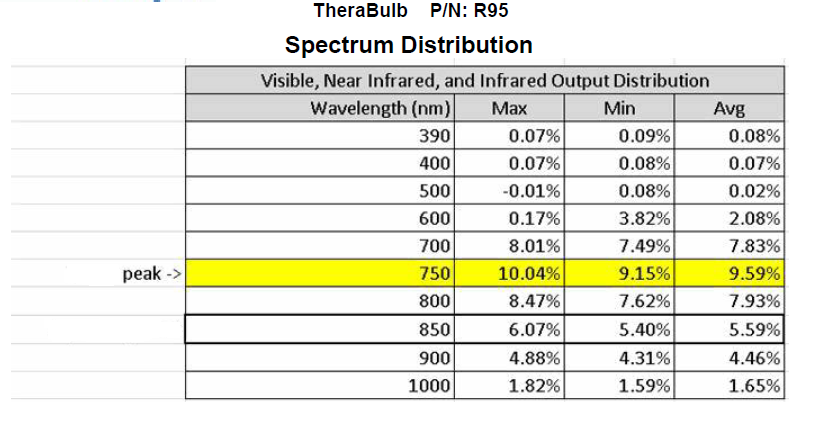
You can see in the diagram it has a wavelength distribution that includes a little bit of all the wavelengths. This is more in line with how nature provides this light via sunlight.
How does this compare to far infrared saunas and traditional saunas?
Traditional saunas don’t have any red or near infrared photobiomodulation effects so they can’t be considered full spectrum.
Far infrared saunas will often put a LED panel in their units that typically have a red light at the single frequency of 680nm and a near infrared light at 850nm. This is good. But, would you consider this full spectrum? It depends how you define it. To me it’s not truly full spectrum and nature has all the wavelengths for a reason.
One final point. To get a therapeutic dose of near infrared light you will need to spend time in your saunas. Fortunately this is how saunas are used!
Consider that in a traditional photobiomodulation session with an LED panel you are very close to it and the strength (irradiance) of the light is much greater. As a result, your time in front of the panel is much less. The sauna will work…..it just takes longer so make sure you use your sauna regularly.

A near infrared sauna provides the best of both worlds. Heat and photobiomodulation benefits. There are other factors to consider to determine the best sauna for you but if full spectrum benefits are important to you the NIR sauna might be best. Our portable near infrared sauna is designed so you can use it in any space or any place. For more information visit www.nirsauna.com.au


Chemically this causes a reduced level of sodium and potassium in the tissues which you can see in the above diagram. This is important to understand as sodium and potassium are referred to as the body’s solvents. This means they are responsible for keeping the minerals like calcium in solution. When they go low this ability decreases and the calcium starts to change its form. It precipitates out of the blood and into the tissues, including the hair, hence the high levels we frequently see on hair tissue mineral analysis.
The bad news about this movement of calcium out of the blood is that it is not just going into the hair it is going to many other tissues. Stop and think about what calcification (hardening) of the body would look like. There would be a predisposition for arthritis, muscle aches, bone spurs, gall and kidney stones, hardening of the arteries and then high blood pressure, and memory loss to name a few. This is a very real and significant issue in the aging and chronic degenerative process.
There are also psychological qualities associated with high levels of calcium such as stability, hardness, rigidity. One might imagine that while these might be considered positive traits, when applied in excess they would become negatives. The opposite would also be true with not enough of these traits as calcium is also an important sedative mineral.
A calcium “shell” occurs when the hair tissue calcium level is above about 170mg%. As Dr. Wilson writes “It is common, especially in adult women, and is associated with psychological withdrawal, depression and emotional suppression in most cases. It lowers one’s awareness level, like living behind a concrete wall of calcium.” One is virtually trying to wall oneself off and away from the overwhelming stresses of life.
An interesting dichotomy also occurs with this biounavailable calcium. Obviously on the hair tissue analysis we are seeing a high level of calcium but as we have mentioned it is in a form that the body cannot properly use. This allows the situation to exist where one will potentially have symptoms of both high and low calcium at the SAME time. This can be most confusing unless you understand what is going on and is important to know so that you can determine the right amount of calcium for the individual.
Remember too much OR too little is an issue.
Finally another reason for a very high level of calcium is if the thyroid stats to fatigue and slow down. When this occurs the opposite gland, the parathyroid, will typically speed up. The thyroid puts calcium into the blood and the parathyroid puts calcium in the tissues as a general rule. High tissue calcium can therefore be reflective of a tired underperforming thyroid and the resultant higher parathyroid activity.
Hopefully from the above examples you can see how important it is to have a proper hair tissue mineral analysis done and interpreted. Blood is a different medium altogether and will often show normal while the tissues and a person’s symptoms are saying something totally different. With this knowledge much can be done to address and reverse the many and varied chronic degenerative diseases that are plaguing us in modern times.
To have a test performed visit us at www.lifestyleintegration.com.au

We are in the midst of a light epidemic and you probably don’t even know it. There is an overabundance of ultraviolet light (UV) and blue light (screens) and a deficiency in red and near infrared light. We are also in the midst of a nearsightedness or myopia epidemic. Up to a third of the world’s population by some estimates. The cause is most likely light deficiency. Specifically red and near infrared light deficiency.
Most of you have probably heard that it’s bookworms that get near sighted. You know….the heavy readers. This theory has been around a long time and it suggest that reading close up slowly changes the eyes. It turns out this isn’t the case.
It is true however, that research has shown that there is a strong association between education levels and myopia. What has now become crystal clear though is that this is a correlation, not a cause necessarily.
If you stop and think about it, the other thing that happens if you read and study a lot is that you spend time indoors. Out of sunlight.
In a Nature article titled The Myopia Boom, they had this to say on outdoor light time. “Based on epidemiological studies, Ian Morgan, a myopia researcher at the Australian National University in Canberra, estimates that children need to spend around three hours per day under light levels of at least 10,000 lux to be protected against myopia.”

This was back in 2015. However, they didn’t really extrapolate on the mechanism. Just that more time in sunlight was beneficial in preventing myopia.
So what is the actual mechanism?
Three recent studies from 2021 and 2022 shed some further “light” on the likely mechanisms.
The study titled Effect of Repeated Low-Level Red-Light Therapy for Myopia Control in Children found that 69.4% slowing of axial elongation and 76.6% slowing of myopic refraction progression. With nearsightedness the eye ball elongates, so if you can reduce this good things happen. The refraction is the strength of the glasses you would need. These are huge results showing how red light therapy can slow the deterioration of the eyes.
This 2021 study, Orthokeratology and Low-Intensity Laser Therapy for Slowing the Progression of Myopia in Children, also showed the benefits to red light therapy. It was looking to see if the red light would work as well as orthokeratology (wearing a contact lens to flatten the eye). They found that the LLLT worked better than the orthokeratology to control axial elongation and slow myopia progression. LLLT is also known as red light therapy or photobiomodulation.
The final study from 2022, Low-intensity, long-wavelength red light slows the progression of myopia in children: an Eastern China-based cohort, had similar results. They “underwent LLRT treatment (power 0.4 mW, wavelength 635 nm) twice per day for 3 min each session, with at least a 4-h interval between sessions, and a control group of 56 myopic children.” They concluded that “repetitive exposure to LLRT therapy (photobiomodulation) was associated with slower myopia progression and reduced axial growth after short durations of treatment.”
So, it would appear, that red light therapy prevents the progression of myopia.
As with all new research there are limitations and more research needs to be done but intuitively this makes sense.
Spend time outdoors. Children ideally need to spend approximately 3 hours outdoors per day to prevent myopia.
You can get your red light at home with photobiomodulation devices. However, you should seek advice from your health professional to ensure you are working within safe parameters. We are not offering medical advice or advocating irresponsible application of red light therapy or photobiomodulation.
The two general ways you can get red light therapy at home are the following.
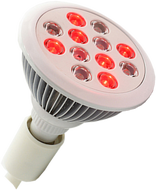
Incandescent lamps such as TheraBulb provide red and near infrared light similar to what the sun provides. They have a full spectrum wavelength profile that includes red light and some heat. These can be used in a sauna or as a single lamp. Saunas should not be used for children under 6. Children should always be supervised around these lamps as they are a burn risk.
These simple lamps are becoming increasingly popular. You can purchase inexpensive lamps such as hand held units or more expensive panels. They are simple to use and quite safe. Staring directly into them is not advised due to the brightness of them.
Myopia or nearsightedness is an ever-increasing problem. Recent research in the photobiomodulation field is progressively showing that red light, and probably other wavelengths, have a protective effect on the eye. It slows and prevents the progression of myopia in children. It is not clear if this light will reverse the problem.
Light deficiency appears to be the cause of nearsightedness. I have been talking about light deficiency for years and firmly believe the public needs to be made more aware of it. As humans we need to spend time outside. We need to witness the sunrise. We should walk and play more. Try to work outside when we can. The benefits are becoming increasingly clear and now it seems that our vision might depend on it.
While this blog focuses on children there are many other reasons for us older folk should use red light therapy and photobiomodulation for our eyes. Research shows it can help with dry eyes, diabetic retinopathy, macular degeneration, glaucoma, optic nerve injury and other conditions.
For more information visit www.lifestyleintegration.com.au or for here for everything about near infrared saunas
Yours in Health,
Dr Todd Lizon (Chiropractor)
B.P.H.E., D.C.

My daughter is pregnant with what will be our first grandchild. This got me thinking a bit about nutrition and how it’s assessed. Most of us are familiar with the old belief that the foetus’s nutritional needs would be accommodated for, regardless of what the mother ate. Turns out this isn’t entirely true, but it gets you thinking about how a nutrient could be normal in one area of the body and not another. A hair mineral analysis is a lot like this and the levels we see in a hair mineral analysis are often completely different to what we see on blood tests.
The first thought most people have when they see this is that the blood test is the gold standard so the hair mineral test must be flawed or inaccurate. This is not the case at all.
Our blood is under strict homeostatic control. For the most part, it has to stay within the normal ranges for the body to function optimally so if a mineral like magnesium is dropping in the blood our body will take it from the tissues and cells so that it can stay normal. If this goes on for a long time you will then have normal levels of a mineral in the blood but deficient levels in the tissue. A hair mineral analysis is very helpful in assessing these sorts of scenarios
We need to be very careful when we are comparing hair analysis results with other tests such as blood.
If you broke your arm, would you want an X-ray or a blood test? Clearly an X-ray but does that make a blood test an inherently BAD test? No. But it does make it the wrong test in that situation.
When it comes to biochemistry in our bodies it’s pretty easy to understand that if it goes “off” then illness will result. The thing is that when you really think about it, biochemistry is going on in our tissues like muscle, bone or brain NOT just blood. When we understand most of our biochemistry is occurring in our tissues, not blood, AND that blood will take at the expense of the tissues it becomes clear that a hair mineral analysis is a valuable test even if, especially if, it is giving different results to the blood test.
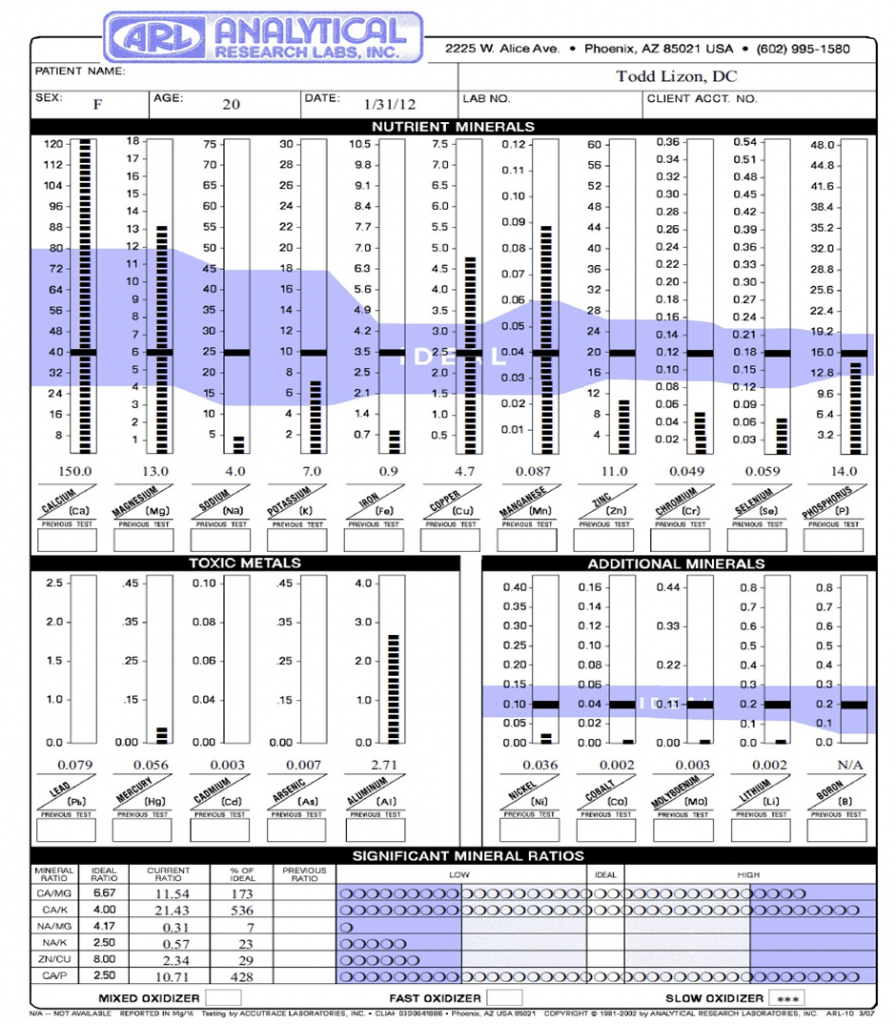
When you take the hair, and have it tested, you take the most recent 3cm of growth. In other words, the 3cm closest to your scalp and you throw the rest away. Hair grows at a consistent rate. About 1cm per month so our 3cm sample is representative of the 3 month AVERAGE of the nutrients we are measuring. This has a distinct advantage. Let’s say you eat bananas before having a blood test taken. Your blood potassium level may be high that day. However, if you have your blood tested the next day and did not eat bananas, your blood potassium may be normal, or even low. The hair mineral analysis potassium level is reflective of overall, or long term dietary habits NOT what is consumed just for a day or two.
This is important if you are looking to determine what you should be supplementing with.
This is just a short list of some of the differences that exist between hair mineral analysis and blood tests. The reality is that there is not one single test that will give us all the information we need. We need different pieces of the puzzle as they say to see the whole thing. We need to know your symptoms, sometimes exam you, look at blood or urine tests and sometimes we need a hair mineral analysis.
At Lifestyle Integration we have been providing hair mineral analysis testing for well over 10 years. If you are looking for that missing piece of information or just want to know what is actually happening in your tissues we can help.
Subscribe to our newsletter to get our free eBook on how to manage metabolic dysfunction
The SPEED Trap: How To Reverse Metabolic Dysfunction

We are living longer. Unfortunately, what can sadly be missing with this gift of longevity is a high quality of life. The ability to fully enjoy our time walking this Earth. Studies have unequivocally shown that a lower level of fitness is predictive of a higher risk for all cause mortality in middle aged people. Fortunately, there are tests that can give us indicators as to whether our longevity will be a blessing or a curse.
Over the last number of years a few screening tests have been developed that give us an idea if we will age gracefully and be able to enjoy a high quality of life.
First, a disclosure. As with any test there are limitations. These are indicators only and not guarantees. Injuries, disabilities and other factors can all influence performance on these. If you do not score well on any of these tests do not automatically assume that you will not age well. However, you may wish to work on your overall fitness and health to build as much of a base as you can.
The first test is called the sit to stand or sitting rising test.
This test was first published in 2012 in the European Journal of Cardiovascular Prevention. Simply put it’s an assessment of your ability to sit down and then stand up unaided. You can view the test HERE
The reason the sit to stand test is predictive of quality of life and longevity is because to do it you need a high level of strength, flexibility and balance. The authors state a high score can “reflect the capacity to successfully perform a wide range of activities of daily living, such as bending over to pick up a newspaper or a pair of glasses lying under the bed or table.”
It also “likely indicates a reduced risk of falls”. As we know falls are a major risk as we age.
In brief, they found that over the study period 159 people died. Of these deaths the majority were in people who scored low on the test. Only two of the deaths were in people who scored 10/10 on the sitting rising test. You can read the study here. Sit to Stand Test
In 2019 a study called the “Association Between Push-up Exercise Capacity and Future Cardiovascular Events Among Active Adult Men” was published in the Journal of the American Medical Association.

They looked at over 1000 men with an average age of 39.6 years. They found that men who could “complete more than 40 push-ups were associated with a significantly lower risk of incident cardiovascular disease event risk compared with those completing fewer than 10 push-ups” A 95% lower risk!
At Lifestyle Integration we have written about cardiovascular disease before and as a man over 50 we need to pay attention as it is the leading cause of death. If you want quality of life and longevity you need to pay attention to your heart health and if doing a few push-ups might make a difference I’m all in.
A third test that can help to predict our quality of life as we age in walking speed.
It was found that “of the 34,485 adults in the studies, people with average life expectancy walked at about 0.8 meter per second. For those with a gait speed of one meter per second or faster “survival was longer than expected by age and sex alone.”
Lifestyle Integration is all about your health, well-being and longevity. We hope these simple little tests can start to give you a baseline or indicator of where your health might be. Remember they are only indicators not guarantees.
For other tools and products that can help with your quality of life visit our website or click on the links to see more about things like fish oil, Vitamin D, near infrared saunas or Hair Mineral Analysis